
Artists/Bands [M]
Makeham to Ian Mitchell ……. p.1
Peter Mitchell to David Morris ……. p.2
NB: If an individual’s Christian or surname is currently unknown this is indicated by an asterisk placed between brackets [*].
PETER MITCHELL
(1959 – )
- Bands: Blood Brothers (aka The Song) ▪ Captains of Industry ▪ Golden Myst ▪ The Great Unknown Band ▪ Grubs ▪ Hewchell ▪ Methodist Youth Group Band ▪ Omshafarat ▪ The Rudiments ▪ Zenith
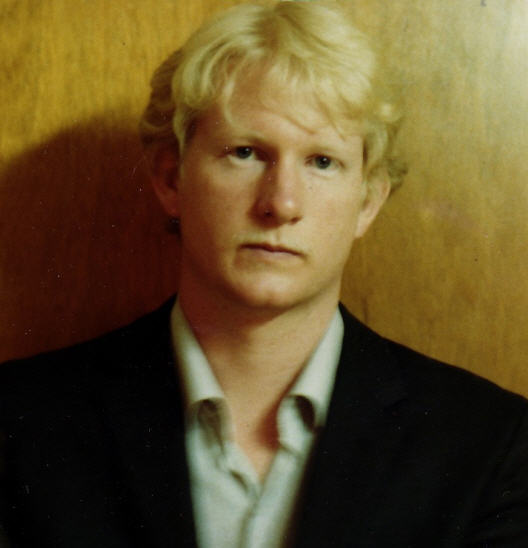 Vocals /guitar/bass guitar/songwriter/producer.
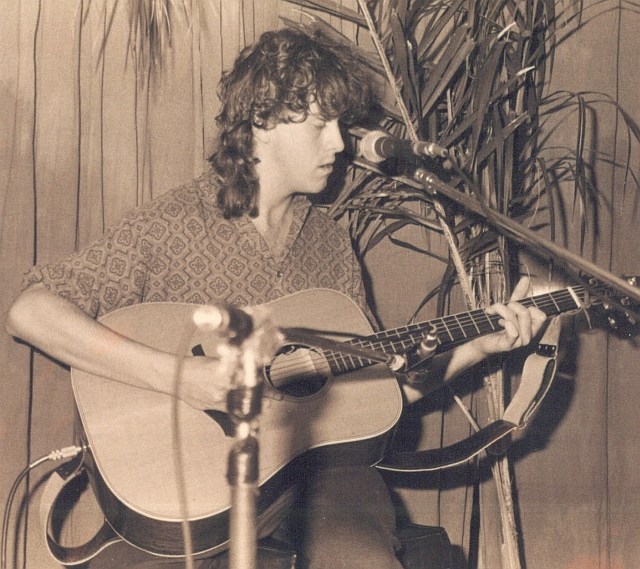
Arguably the finest songwriter to emerge from Armidale, and certainly the most prolific, Peter Mitchell lived in the town from 1970 until the early-1980s. From 1983 he has been the principal songwriter/lead singer/guitarist with several rock bands, notably Captains of Industry, and has for many years also collaborated on numerous musical projects with his younger brother Ian [above]. His musical influences are many, with singer songwriters like Bruce Springsteen, Bob Dylan and Joni Mitchell having an early impact.
Initially raised in the outer Sydney suburb of Blacktown, Mitchell’s father was teacher, historian, and raconteur Dr Bruce Mitchell (1935-2009). His mother, Jean Mitchell (nee Bull) was a teacher who later served as deputy head of Armidale’s Presbyterian Ladies College (PLC). Peter was eleven when the family moved to Armidale and he briefly attended Ben Venue Primary School, then Armidale High School before transferring to the town’s newly established second high school, Duval, in 1974. It was around this period that a passion for words and music took firm hold of his imagination. Mitchell’s most important early creative collaboration was to to be with Trevor Dunham (lead singer for Duval High’s student band Edge between 1975 and 1976). After Dunham moved the Australian Capital Territory in 1976, Mitchell made frequent trips to Canberra through until at least 1984 so that they might continue to work on each other’s musical ideas. More than forty hours of recordings still exist from those days (Mitchell, 9). Much of the material also involves Dunham’s wife, Kathleen.
Another of Mitchell’s early collaborations was with Tim Hewitt (and in later years with Hewitt’s wife Cathy). The pair combined part of their surnames to form Hewchell. Initially just an excuse for mucking around, Hewchell eventually played live gigs in addition to making occasional recordings and even some videos. Describing Hewchell as a ‘chaotic blast with splashed of the Blues Brothers and The Rolling Stones, mixed with elements… unique,’ thee pair engaged Trevor Dunham and organist Paul Cole to undertake a tour of northern New South Wales as the Methodist Youth Group Band (playing a repertoire of rock songs with spiritual themes). One Armidale gig, the 1976 high school “Battle of the Bands” competition, saw them joined by drummer Cliff Grigg (later with v Spy v Spy).
Mitchell, Hewitt and Dunham also played with various other school mates (in bands with names like Omsgafarat, Zenith and Grubs between 1973 and late-1976, although Mitchell was absent from Armidale for much of 1975. During that year he travelled to England, where he collaborated with Nick Hawes while living in Dorchester-on-Thames. Mitchell says of that time, ‘we called ourselves Golden Myst and re-invented or re-worked every teenage cliche known to humanity. Some of the musical ideas are surprisingly interesting possibly because of their inherent naivety’ (p. 11). The following year Mitchell returned to school in order to complete his higher school certificate.
1976 also saw Mitchell and Trevor Dunham’s creative association become one separated by distance as a result of the latter musician’s mover to Canberra in the Australian Capital Territory. Over the next eight or so years Mitchell made frequent trips to the national capital so that they might continue to work on each other’s musical ideas. More than forty hours of recordings still exist from those days (Mitchell, p. 9). Much of the material also involves Dunham’s wife, Kathleen.
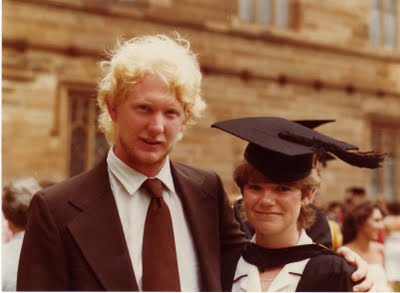
Mitchell and his muse
Between 1978 and 1982 Mitchell drifted through various jobs, including that of a rouseabout/assistant researcher at Tibooburra with his father-in-law-to-be. He spent most of 1982 in Broken Hill, New South Wales, in order to be with his future wife Penelope who, having graduated from university, was spending her nursing registration year there. That same year he recorded the solo albums Almost Human and Far Cry on a Tascam 144 4-track Portastudio.
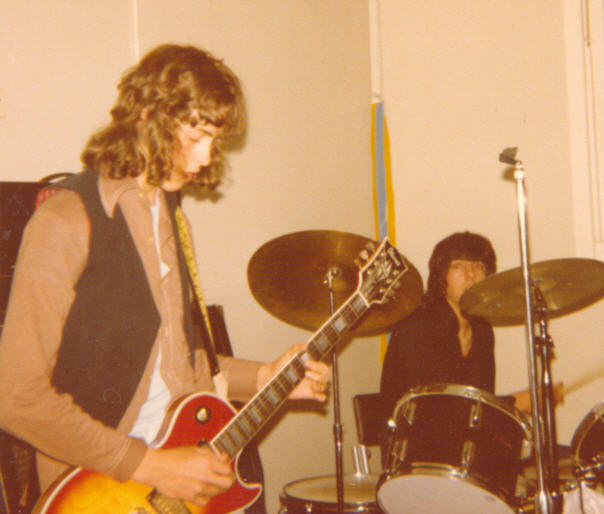
From 1983 up until mid to late-1985 Mitchell led the Sydney-based Captains of Industry. The band, which included his younger brother Ian on drums, perhaps best articulated his early musical vision. Although Mitchell received some early interest from Chappell Music, the charts at that time were steadily being dominated by ‘video’ rock bands making it almost impossible for word-centred bands like Captains of Industry to break through. The Captains nevertheless established a small but enthusiastic following in Sydney. They also recorded many hours of music, both at the band’s own studio and at Alexander Mackay College. Seven songs were also produced by Martin Cass at JMC Studios.
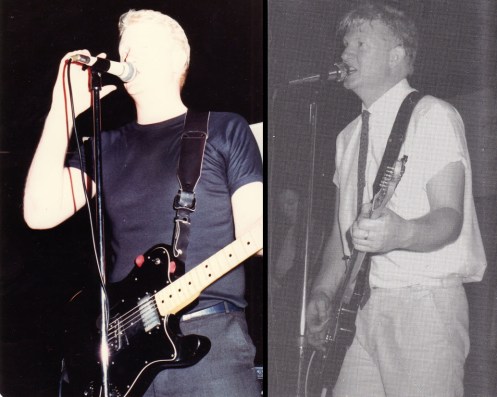 On stage with Captains of Industry
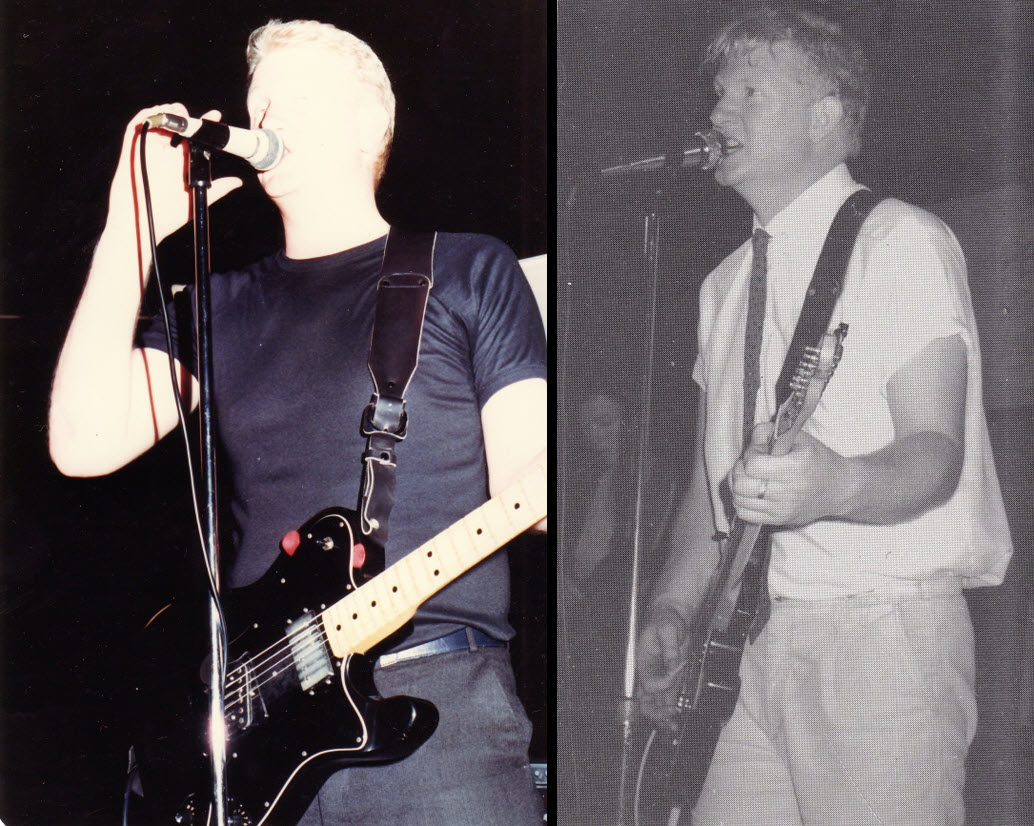
After disbanding Captains of Industry, Mitchell focused his creative energies largely towards writing and recording, and mostly in collaboration with his brother. Between 1985 and 1989, while working as a storeman and driver at the Chatswood House and Garden Centre, he completed a BA (Hons) degree at University of Sydney. At the same time he also recorded the albums Wolf in a Riding Hood (1985); Broken Man (1986) a thematically linked 10 song cycle; Ghost Around the Town (1986), Music for Sundays in Winter (1987), and Arid Man (1988). In 1988, after having moved to the Hazelbrook in the Blue Mountains Mitchell formed a party band/collective called The Song. A number of songs recorded in rehearsal from that period were later put together as Spontaneous By Design under the name Blood Brothers (the Mitchell brothers resurrected The Song some 36 years later to record an album of old and new material)
Over the next two years Mitchell produced a slim volume of poetry titled Songpoems and re-worked a selection of his early songs, giving them an acoustic and keyboard-dominated sound. These comprise Half Remembered Sorrow (1992). In late-1992, then living in Baulkam Hills (Sydney), he, Ian and sister Judy, teamed up with Tim Hewitt, Ian Woolsey, and Colin Sharp to form Legends of Obscurity. This later morphed into The Rudiments (without Judy Mitchell). The band recorded five songs at Damian Gerard’s Studios (Ultimo). Released on cassette, several hundred of these were eventually distributed.
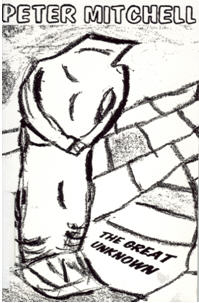 In 1995 the brothers produced a three CD recording of original songs to accompany Peter’s book The Great Unknown. They later formed The Great Unknown Band, a three piece unit (with Brian Miller on bass), which played at least one gig in Armidale (the Musicians Club) in 1999. That same year they recorded the album Kisses from Shadows / Jewels from Tears. The band has since released Bald Rapunzel (2000) and Fabric of Blood and Flowers (2003). Mitchell also produced the largely solo albums Pictures of a Life of Ink and Ash (a collection of spoken word pieces set to soundscapes, 2000) and Invisible Wire (2001).
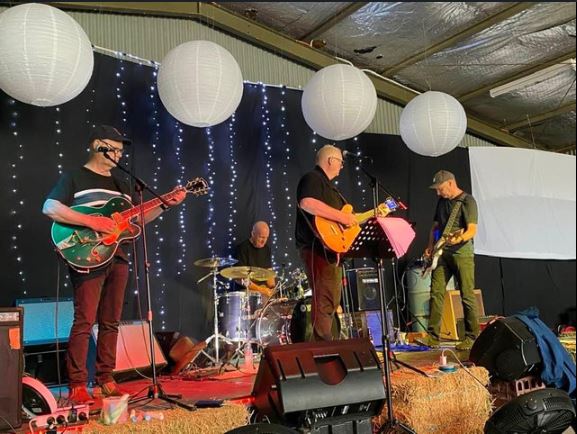
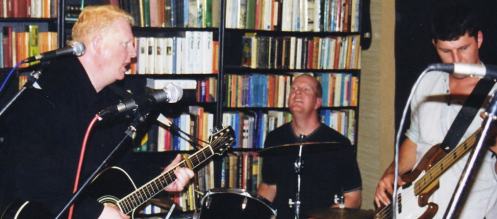 The Great Unknown Band
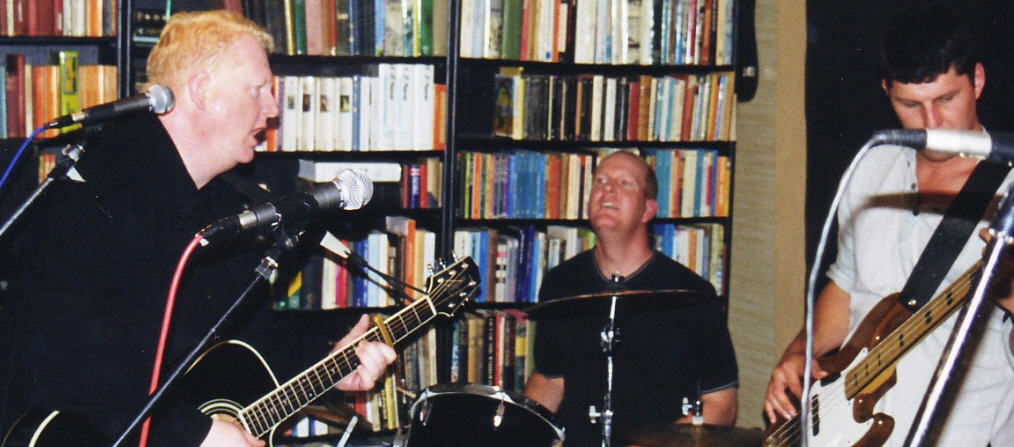
As noted earlier, Mitchell and his brother Ian revived The Song as a recording and performing band in 2024, bringing in Ian Woosley and James McCormack on bass/vocals and lead guitar/vocals respectively. The self-titled album was recorded professionally in Newcastle (NSW) and comprises both new and old (re-recorded) songs. It was promoted by select live performances (notably in the Hunter Valley region.
As an author Mitchell has self-published the travel memoirs All About Shadows: Travelling in Italy, France and England (1997), Ulysses and Penelope: Travelling in Ireland (2006), and Forgotten Don Quixote: Travelling in Spain and Portugal (2007).
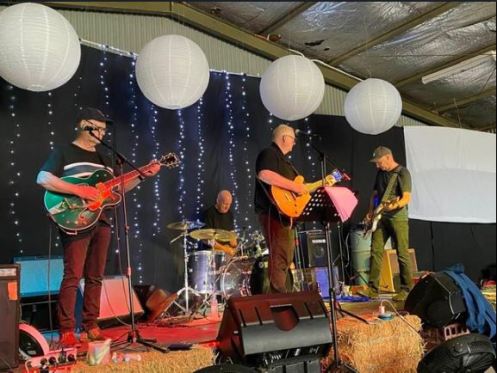 The Song (2024)
In addition to his life as songwriter, musician, performer and writer, Mitchell spent more than a decade as a public servant. Between 1990 and 2003 he was employed as a Compliance Officer (case-managing alleged illegals) for the Department of Immigration, and later as Manager of the Villawood Immigration Detention Centre. His public service career also included being appointed Manager of the Kosovar and East Timorese “Operation Safe Haven” at East Hills in 1999.
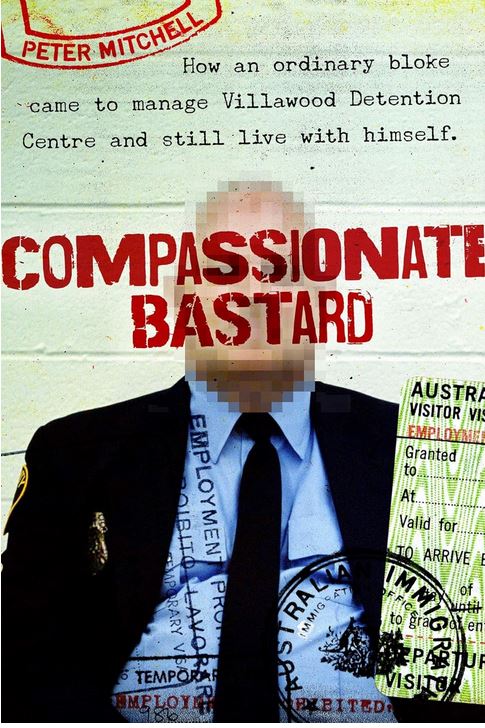 Mitchell’s academic career has seen him awarded a Dip Ed. (University of New England) and an MA in Creative Writing (University of Western Sydney). He has been commissioned to write histories for the Clinical Oncological Society of Australia and the Freeman Sports Club and has reviewed poetry and presented conference papers for TEXT: The Journal of the Australian Association of Writing Programs (2005-06). In 2006 he began his candidacy as a Ph D student in creative writing at the Central Queensland University, graduating in 2009. As part of his dissertation, Mitchell wrote The Compassionate Bastard: Memoir of an Immigration Officer, an expose of his time at Villawood. The thesis was published in book form in 2011 by Penguin. The following year extracts were published by Penguin under the title Inside Villawood: How I managed a Detention Centre.
Peter Mitchell. “Romantic Women.” (1986) From Ghost Around the Town.
The Great Unknown Band. “I Made Her Up.” (1999) From Kisses From Shadows / Jewels From Tears.
The Great Unknown Band. “The Song I Write For You.” (2000) From Bald Rapunzel.
The Great Unknown. [aka Peter Mitchell] “New Bob Dylan.” (2000) From Invisible Wire.
The Great Unknown. [aka Peter Mitchell] “The Band Song.” (2003) From Fabric of Blood and Flowers.
- A selection of Mitchell’s solo and band albums can be accessed online via streaming websites such as Spotify, Apple Music, and Amazon Music. NB: Some sites erroneously include releases by other artists with the same name (notably a South African-born musician/singer).
- You can listen to a selection of other Peter Mitchell songs via the AVTA entries for Blood Brothers (aka The Song), Captains of Industry, and The Rudiments.
- Mitchell’s website Pennyand Peter (http://www.peterandpenny.com) is no longer active. It had included a selection of songs from across his career, as well as PDF versions of The Great Unknown and The Song I Write For You Vol 1. (2003) and Vol. 2 (2010). The Great Unknown Band’s myspace page is also no longer active.
- An interview with Mitchell focusing on The Compassionate Bastard was broadcast on 28 June 2012 as an episode of Conversations with Richard Fidler. It can be accessed as a podcast via ABC Listen.
- Discography [pdf]
Peter Mitchell and Trevor Dunham (2009)
Sources: Art of the Real Conference program University of Newcastle, 2008, p. 39; Peter Mitchell, The Great Unknown (1995), v. pags. Images: All photos courtesy of Peter Mitchell
BRIAN ‘LANKY’ MOORE
- Bands: The Chooks ▪ Constable Green and Moore ▪ Kelsey ▪ Point Blank ▪ Purple Haze ▪ Scamp ▪ Shane
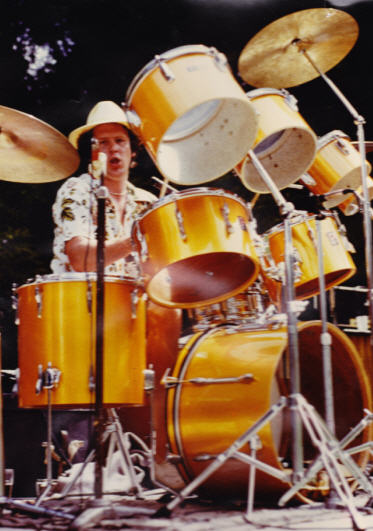 Drums / vocals
Brian Moore learned percussion in his early teens as a member of the Police Citizens Boys Club Drum Corp, which had formed after the club had received a government grant. He subsequently joined the De La Salle Catholic College cadet band as a drummer playing along-side another of the region’s drummers, Bob Hobbs (later with Finks and then Trek). In 1970 an insurance policy his mother had set up for him matured, and when asked how he wanted to spend the $500 the sixteen year old Moore indicated a set of drums. With arguably one of the best drum kits in town he was quickly snapped up by Purple Haze, one of two bands formed primarily out of De La Salle students. The following year members from both Purple Haze and Manic Depression joined forces to form Shane. That band went on to find a good of success in Armidale and the nearby centres, while also competing in two Hoadley Battle of the Sounds competitions. In the second year Shane made it all the way to the NSW regional finals at Newcastle, coming third.
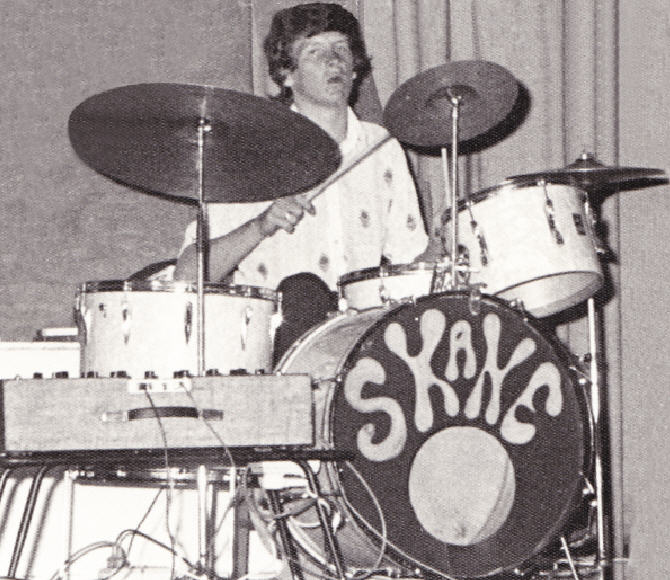 Following the disbanding of Shane in late 1972 Moore teamed up with Rocky Lane (older brother of Shane guitarist Bob Lane), former Purple Haze guitarist/singer Bob Jones and James Arthur to form Kelsey, one of Armidale’s most popular bands of the 1970s. The quartet remained together for some four years and played nearly every major venue in town over that period, including numerous UNE balls, and travelled to other centres in the Northern Tablelands and New England region. When Kelsey called it quits in 1976, Moore and the Lane brothers formed Scamp with keyboardist Clive Gregory.


Left: Shane (Armidale Golf Club ca. 1972). Right: Kelsey (Armidale Bowling Club, ca. 1975)
In 1977, following the break-up of Scamp, Moore teamed up with former Moree musician Kim Constable, who had come to Armidale some two years previously to join the Robbie Gray Big Band. Moore and Constable conceived the idea of forming a power trio which would play hard rock classics from the 1960s and 1970s. After noticing the capabilities of Duval High School guitarist/singer Chris Green they invited him to make up Constable Green and Moore. Apart from the advanced PA system they operated (which included a front of house mix) the trio stood out from other local bands through its use of three lead singers and three-part part harmonies.
Constable Green and Moore remained together until 1980, at which time Constable and Moore decided to move to Sydney where they teamed up with Bob Jones to form The Chooks. Chris Green later teamed up with another Armidale musician, Richard Rummery to play in the short-lived Sydney-based band Shooting School. The ending of Constable Green and Moore, which towards the end became a four-piece (known as Constable, Green, Moore and Brazel) was a mutual affair with no animosity. The band (in both 3 and 4-piece manifestations) has reunited on a number of occasions since the early 1980s, playing a combination of gigs and parties.
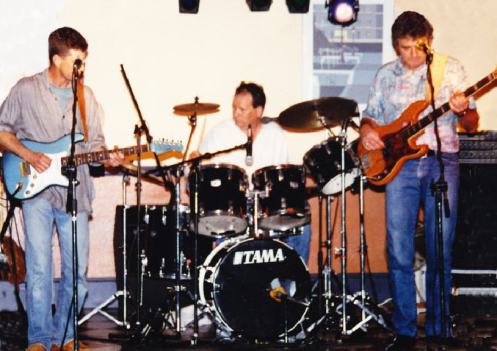 Constable Green and Moore (1995 reunion)

The Chooks were a very popular band in the inner suburbs of Sydney during it’s brief time together (by late 1981 the trio became a four-piece). By early 1982, however, Moore became tired of Sydney and the pub circuit grind and returned to Armidale. His place in The Chooks was brefly taken by Mick O’Shea before the band eventually broke up. Back in Armidale Moore was offered a position at Newell’s Music Centre by its new owner, Armidale musician Graham Moffatt. Moore only worked at Newell’s under Moffatt for a little under a year before the business closed down. He was subsequently invited to open up an Armidale branch of Cheapa Music for Tamworth-based businessman Peter Harkins. Moore later returned to Newell’s for its new owner Wilbur Porter, remaining there for about two years before going into business with his first wife, Robyn. The couple opened up The Loft, a specialist jeans shop situated a few doors away from Newells in the Armidale Mall. They later sold the business to Clive Gregory and his wife Madeline (sister of two other prominent Armidale musicians, Phil and Doiran James). Sometime later the Moore’s separated and eventually divorced. Robyn later married Lanky’s friend and former band mate Rocky Lane.
Although Lanky Moore’s sat in with a number of Armidale bands over the next few couple of decades, notably Point Blank in the late-1980s, but he did not return to playing with any groups on a permanent basis, turning his attention instead towards a more business-orientated career. In later years he became manager of the New England Credit Union and a Justice of the Peace.
Source: Brian Moore (interview, Aug. 2010). Images: All photos courtesy of Brian Moore. †
SIMON MORGAN
(ca. 1960 – )
-
Bands: Blue Max ▪ Edge ▪ The Inmates ▪ R.A.F.
Vocals /guitar /songwriter
Simon Morgan’s family moved to Australia in 1976 from Birmingham, England. He is believed to have played in several school bands, including one called Finchley’s Mob. While the veracity of his claim that he personally knew the members of Black Sabbath (who also hail from Birmingham) may never be proven, he certainly played a significant role in influencing the musical tastes of his peers at Armidale High School. Black Sabbath certainly increased in popularity, with ‘Paranoid’ becoming a favourite cover song.
1976
Not long after arriving in Armidale he co-founded the short-lived Blue Max with Dick Rummery (bass/vocals), Malcolm Toft (sax/vocals) and Rod Clay (drums/vocals). The following year he and Rummery joined another high school band, Edge, after several members finished school and moved on. After Edge disbanded Morgan joined David Morris, Peter Newell and John Solomons in forming seminal Armidale punk band The Inmates.
When Preston Stahlut replaced David Morris, Moragn began collaborating with the band’s new guitarist on original material. The Inmates quickly established a formidable reputation in Armidale, and according to an interview for Neucleus magazine, the band had also attracted some interest from Trafalgar Records in Sydney. Although indicating that they intended to move to Sydney this never eventuated. Morgan did, however, move there sometime around 1980.
Not long after moving to Sydney Morgan briefly teamed up with Craig Bloxom and Michael Wiley in the pre-v Spy v Spy band R.A.F. He is remembered playing at least one gig with that band at the Heritage Hotel at Rushcutter’s Bay (source Clay Djubal). His increasing drug use and unpredictable behaviour saw him fall out with friends and associates, however, and he eventually disappeared from the Sydney music scene. His whereabouts after 1981 are yet to be ascertained.
Source: Clay Djubal (2009). Image: Photo courtesy of Clay Djubal.
DAVID MORRIS
(1961)
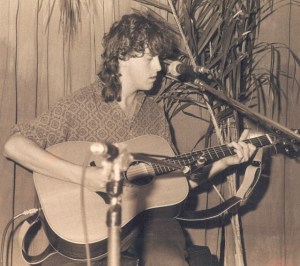 Performing at Clayz Kitchen, Armidale (ca. 1987)
- Bands: The Astros ▪ Guerilla ▪ Head Injuries ▪ Health Club ▪ Helga and the Blitzkrieg ▪ The Inmates ▪ Some Trippin Diggers ▪ Vice Squad
Guitar/piano/bass/drums/vocals/songwriter
David Morris and Doiran James – Health Club
David Morris’ family moved to Armidale in 1966 when his father, Professor Granger Morris, took up a position as the Chair of Pure Mathematics at The University of New England. The youngest of three brothers, David attended Armidale Demonstration School and Armidale High. As a child he showed much talent for music, becoming equally proficient on guitar and piano, along with bass guitar and drums.
Morris became involved in the Armidale music scene while still at high school, and in late 1977, aged 16, he co-founded Armidale’s seminal punk band, The Inmates with bassist Peter Newell. However, after playing the band’s first gig he travelled briefly to New Zealand and on his return found that he’d been replaced by Preston Stahlut. Morris’ next two Armidale-based bands were Health Club (1978) and Vice Squad (1978-79).
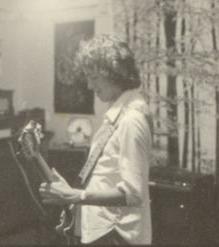
Rehearsing with The Astros †
When Morris and bass player/singer Rod Clay (Health Club/Vice squad) decided to move to Sydney in late 1979 they formed a new power trio, The Astros, with Sydney-based drummer/vocalist Matt Hirst (its name was inspired by the Astro Boy television series). They were later joined by former Armidale band mate Dick Rummery, but the band was short-lived, however. Among Morris’s more popular songs from this period were: “Cherrie’s Got a Habit,” “Needlepoint Park,” “Knife Attack” (about an incident which happed to him in Kensington, Sydney) and “The Astronauts.”
Morris continued to involve himself in musical projects throughout the 1980s and 1990s, both in Sydney and Melbourne. In the mid-1980s he became one of the first musicians to contribute to Clay Djubal’s Some Trippin’ Diggers collaborative (Sydney), notably as co-writer on “Paralytic with Intelligence” (also the title of a 2009 retrospective release). He continued his association with Djubal on one of several returns to Armidale, his expertise as a solo artist being utilised by Clayz Kitchen between 1987 and 1988. In addition to occasional solo restaurant work Morris provided the live piano soundtrack to silent films put on by the University of New England’s film club Duck Soup (he rarely had a chance to even see the films beforehand and was mostly required to play as he watched each film for the first time). In 1987 he joined the newly reformed Helga and the Blitzkrieg. With the band’s musical talents greatly increased, and with the right mix of covers and original material (including original songs by Morris), the band quickly returned to being one of the region’s leading rock acts.
David Morris’s career has seen him perform during the mid-1990s in Head Injuries, a Melbourne-based Midnight Oil tribute band (playing Jim Mogonie’s role). Since 2000 he has lived primarily in Melbourne, where he continues to pursue his love of music, performing on both piano and guitar at a variety of shows – including private and charity functions. He regularly offers his services to organisations involved in drug and alcohol rehabilitation, and is a highly regarded piano and guitar teacher. He has also recorded many of his original compositions. As a member of the Melbourne Philharmonic Choir he accompanied the Royal Melbourne Philharmonic Orchestra during the 2008 performance of Handel’s Messiah. Morris has also contributed guitar for Richard Rummery’s band ftprints11 – “Soul Groovin'” (Thump, 2005) and “Numb” (Unsound, 2005).
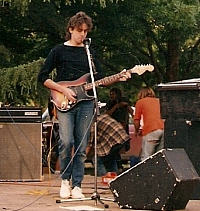 With Helga and the Blitzkrieg (1987)
- To see a series of interviews with David Morris from the 10 Network’s Morning Show (2009) click on: Substance Addition Recovery – Part 1 ; Substance Addiction Recovery – Part 2 ; Substance Addiction Recovery – Part 3 ; Substance Addiction Recovery – Part 4 .
- See also Morris’ YouTube channel Cosmic Cat
- Discography [PDF]
Sources: Clay Djubal (2009) • David Morris (interview, 2009) Images: Top photo courtesy of Heather Grigg ; all other photos courtesy of Clay Djubal except †.
have gravity will threaten
† Copyright for this image has either not been ascertained or we have been unable to locate the owner . If you are the copyright owner and want the image removed please contact this website. To see HGWT and the NTMIA’s copyright statement go to the “About the Northern Tablelands Music Industry Archive” page.

Northern Tablelands Music Industry Archive
Pages: 1 2
 Have Gravity Will Threaten