
Artists/Bands [M]
Makeham to Ian Mitchell ……. p.1
Peter Mitchell to David Morris ……. p2
NB: If an individual’s Christian or surname is currently unknown this is indicated by an asterisk placed between brackets [*].
~~~
PETER MAKEHAM
aka Groover
(1959-2012)
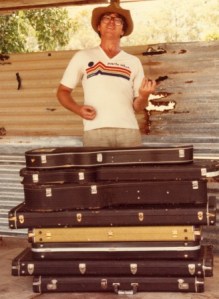 On tour with Helga and the Blitzkrieg (1986)

-
Bands incl. Elsess ▪ Helga ünd der Blitzkrieg ▪ Powder Monkeys
Affectionately known as ‘Groover’ to his friends, Peter Makeham attended Armidale High School where his mother also taught English. While a student he joined the band Elsess as its bass player and in the mid-1980s teamed up with fellow Elsess associate Jon Anderson in forming Helga und the Blitzkrieg. Although he left the band two years later, when his relationship with lead singer Karin Moorehouse ended, Makeham did not end his association the Helgas altogether. When the band played its final gig (Sunray Sunday ’87) he was its front of house mixer. The set itself included two of his original compositions – ‘Stonehenge’ and ‘Another Girl.’.
In the late-1980s Makeham, along with Jon Anderson and Richard Rummery co-founded the Armidale Musicians’ Club. A response to the difficulties faced by emerging bands in trying to get gigs in Armidale at that time, it continued to support the local industry up until the early-2000s. Peter Makeham died in December 2012 after a long battle with kidney disease. His younger brother is Professor Paul Makeham, Head of the School of Media, Entertainment and Creative Arts in the Creative Industries Faculty at The Queensland University of Technology (2012-).
Helga ünd der Blitzkrieg. “Stonehenge.” [words/music by Peter Makeham] Recorded live at Sunray Sunday ’87.
Helga ünd der Blitzkrieg. “Another Girl.” [words/music by Peter Makeham] Recorded live at Sunray Sunday ’87.
- A clip of Jon Anderson, Dave Morris and Karen Moorhouse performing “Another Girl” at Peter Makeham’s wake at the Armidale Club on 20 December 2012 can be viewed on YouTube [sighted 22/02/2024].
Sources: Jon Anderson (correspondence, 2009) • Clay Djubal (2009). Photo courtesy of Clay Djubal.
MANIC DEPRESSION
(ca. 1968- 1970)
- Personnel: Robert ‘Bob’ Lane (guitar/vocals) ▪ Neil ‘Nobby’ Osborne (lead guitar) ▪ Graham Tilbrooks (drums) ▪ Wayne Yoemans (bass)
- Also associated with the band: Eris Shannahan (vocals).
Manic Depression was one of two bands to form out of De la Salle College (later O’Connor Catholic High) and named after Jimi Hendrix songs – the other being Purple Haze. The cornerstone of the band were cousins Bob Lane and Nobby Osborne, who founded the band sometime around 1968/69. Neil Osborne, who was in 3rd form at the time (now Year 9), recalls that he and Bob decided to start their own band because their brothers (Rocky Lane and Garry Osborne) were in the high profile local band Mantra [below]. They initially invited Eris Shannahan to sing but he did not work out and Bob Lane reluctantly took on the lead vocal duties.
Manic Depression’s repertoire was similar to Mantra’s as Bob would learn many of their songs from his brother Rocky (Mantra’s bass player). Among the numbers played by both bands were: “Smile” (Bee Gees), “Jumpin’ Jack Flash” (Rolling Stones). Manic Depression also played songs by The Easybeats and of course… Hendrix.
When Manic Depression disbanded Lane and Osborne joined forces with three members of Purple Haze to form Shane.
Source: Brian Moore [below] (interview, Aug. 2010).
MANNA
(ca. 1976)
- Personnel: Colin Bale (bass/vocals) ▪ Bruce Hooper (12 string guitar/vocals) ▪ Helen Hooper (vocals) ▪ Bill Hurditch (guitar/flute/harmonica/vocals) ▪ Bill Johns (Classical-style guitar/vocals) ;
Manna were an Armidale-based Christian group which played a combination of traditional religious and gospel-style songs as well as original compositions. In a review of their support to Family in 1976 at the University of New England Arts Theatre (3 July), Paul Ridgewell records: “From their first song, Manna showed themselves to be a thoroughly polished, skilful and sensitive group, with a clear, crisp sound, especially featuring the marvellous finger style guitar playing of Bill Johns… The lyrical content of the songs clearly reflected the Christian faith of the members. There were songs of hope, joy and encouragement, mixed with some Billy Borker-type humour. Manna are a very good group and the audience at the concert echoed these sentiments by giving them a strong reception” (p. 29).
Source: Paul Ridgewell. “Manna and Family.” Neucleus 11 Aug. 1976, 29. NB: The Paul Ridgewell review includes a photo of the group but the quality of the microfilm copy is too poor to reproduce here.
MANTRA
(ca. 1970-1974)
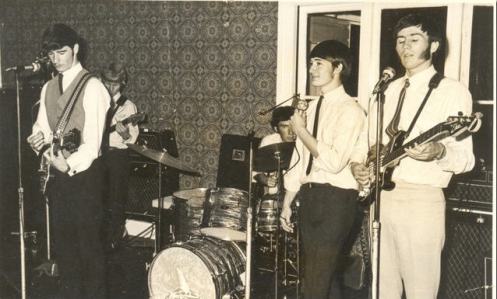 The early years: L-R: Ralph Monley, Larry Townsend, Garry Osborne, Ron Lane and Greg Goldsmith (Armidale Golf Club).
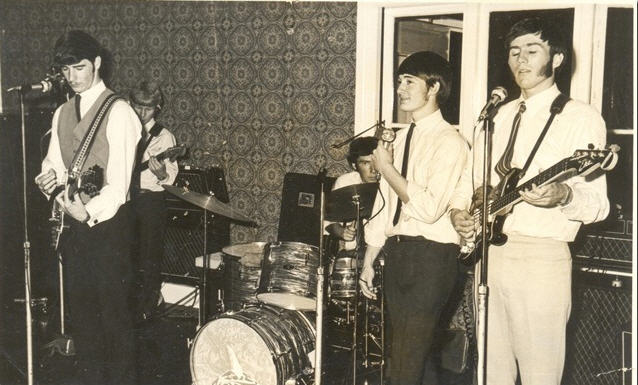
- Personnel: Greg Goldsmith (keyboards/bass) ▪ Ron ‘Rocky’ Lane (bass/cornet/vocals) ▪ Brian Mosley (keyboards) ▪ Ralph Monley (guitar/vocals) ▪ Gary Osborne (drums) ▪ Neil ‘Nobby’ Osborne (guitar/vocals) ▪ Larry “Snowy” Townsend (lead guitar/flute)
Mantra morphed out of mid to late-1960s Armidale bands Artisans and Firebirds, with Rocky Lane, Ralph Monley and Greg Goldsmith having been members of the two earlier groups. The band featured two musicians who also played non-traditional rock instruments – Rocky Lane occasionally playing cornet (with Greg Goldsmith moving to bass), while guitarist Larry Townsend sometimes doubled on flute. When Goldsmith left the band he was replaced by Brian Mosley. Neil Osborne later replaced Snowy Townsend.
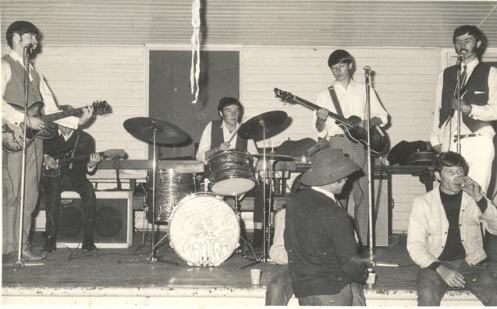 ca. 1971 (possibly playing a B&S ball): L-R: Ralph Monley, Larry Townsend (seated), Garry Osborne, Ron Lane, Greg Goldsmith.

Mantra’s position as arguably Armidale’s most popular band of the early-1970s was cemented in 1972 when two other local bands, Bogislav and Trek (Uralla) decided to compete in the Tamworth heats of the national Hoadley’s Battle of the Sounds competition rather than go up against them. As expected Mantra won the Armidale heat, but never went to the Northern New South Wales finals at Newcastle due to lack of money and difficulties brought on by a state-wide petrol strike. Runners-up Shane appeared in their place (and went on to place third behind Bogislav and Newcastle band, Mata Hari).
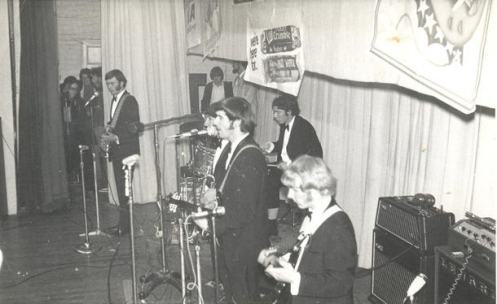 Winners of the 1972 Hoadley Battle of the Sounds (Armidale) heats. Armidale Town Hall.

Mantra: “Time to Make a Change” Recorded live at the 1972 Hoadley Battle of the Sounds competition.
Shoot the DJ [II] “Cop Out” [words/music by Clay Djubal]
-
Nick Miles: lead guitar, harmonica and backing vocals (lead vocals on “La la (Love You babe).” Both songs recorded on a Tascam 244 Portastudio at Golf Ave, Mona Vale (NSW) in 1985. Engineered by Ian Mitchell. Produced by Shoot the DJ.
Source: Clay Djubal (2009). Image sources: (top) Photo courtesy of Clay Djubal (1986) • (Bottom) Vicky Turner Band website (2023). NB: The Soul Survivers’ website and Myspace page no longer exist.
SIGFRIED ‘ZIGGY’ MIRZA
(1958- )

- Bands incl. Captains of Industry ▪ Flight ▪ Native Tongue ▪ No Mates ▪ Serpico ▪ Shoot the DJ ▪ Some Trippin’ Diggers
Guitar/bass guitar/vocals/songwriter.
Of German and Pakistani descent, Siegfried ‘Ziggy’ Mirza spent much of his formative years in Adelaide where his father practiced law. He moved to Armidale in the early-1980s to undertake a science degree at The University of New England, specialising in water hydrology. Having played the guitar since early childhood Mirza also immersed himself in the Armidale music scene, initially playing in the band No-Mates before eventually joining Shoot the DJ in early-1983 as the band’s lead guitarist. With Shoot the DJ he toured throughout Northern New South Wales establishing himself as one of the region’s premiere guitarists. His recording appearances with Shoot the DJ include the retrospective albums Crunch Time: Live at Impies (2007), Cleared for Action (2008), and Mind-Driving (2008), as well as the band’s 1984 radio show, now available as Shoot the DJ On the Air (2023).
In late-1983 Mirza and fellow band members Clay Djubal and Ian Mitchell moved to Sydney to start up other musical projects and Mirza soon found himself sought after as a session guitarist, playing for acts like John Paul Young. Towards the end of 1984 he joined the Mitchell brothers, Ian and Peter, in Captains of Industry, remaining with the group until it disbanded late the following year. In addition to guitar Mirza contributed original material for a number of the band’s songs.
While still with Captains of Industry Mirza co-founded Native Tongue with former No-Mates bass player Kendall [*]. Later that same year he also became involved with the Some Trippin’ Diggers collective during its formative period. One of the first recording sessions, with Clay Djubal, drummer Matt Hirst and keyboardist Des Smith, resulted in the You (Got) Me EP (1985). Mirza and Djubal later recruited former Shoot the DJ drummer Ian Mitchell into the collective. With other musicians (including guitarist Ross Stagg) they recorded several albums worth of material. Some of the songs from this period have since been released by HGWT under the titles Paralytic with Intelligence (2023) and Playin’ to Win (2024). He was also involved in co-writing much of the collective’s early original material.
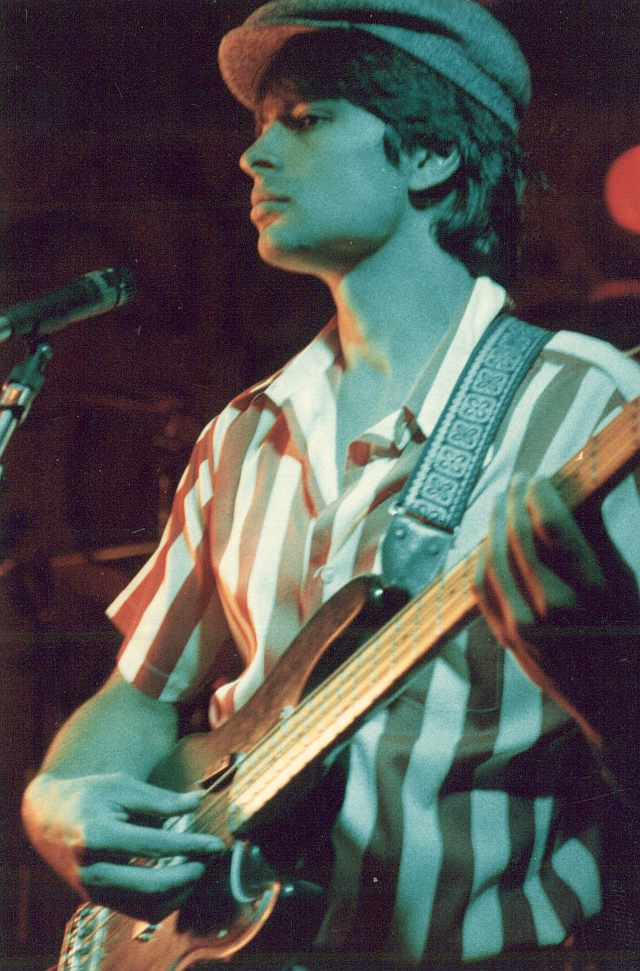
Ziggy on bass
Mirza was unable to join Mitchell and Djubal in reforming Shoot the DJ in 1985 due to his commitments with Native Tongue, but nevertheless helped record several songs while the band searched for a replacement. When the new three piece version, with guitarist Nick Miles [above] undertook a tour of Northern New South Wales with Helga and the Blitzkrieg, he was able to take time off, however, and joined the band as bass player (allowing Clay Djubal to concentrate on lead vocals and keyboards).
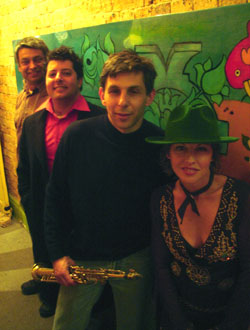
Flight-Flight (Ziggy Mirza rear left)
Mirza spent much of the late-1980s and 1990s teaching science and math at high schools in Sydney while continuing to play music with various bands. He eventually returned to a more or less professional music career, using his musical talents and pedagogical experience to teach music privately. Among the bands and artists he has been associated with were Serpico and the jazz-funk ensemble Flight-Flight. The latter band is described on the Jazz and Beyond website as “an engaging diversity of jazz, funk and ethnic music and sounds, spanning deep chill to infectious exuberance.”
Details regarding Ziggy Mirza’s whereabouts and career since the early-2000s is currently unknown.
Shoot the DJ. “(I’m Not Your) Steppin’ Stone.” Ziggy Mirza lead vocals and lead guitar.
Shoot the DJ [II]. “Put the Boy Down.” [words/music Doiran James and Clay Djubal] Ziggy Mirza lead guitar and backing vocals.
-
“(I’m Not Your) Steppin’ Stone” written by Tommy Boyce and Bobby Hart in 1966. This version recorded live at the Imperial Hotel, Armidale, in 1983 (see Crunch Time LP). “Put the Boy Down” recorded at Golf Avenue, Mona Vale (NSW) in 1985 (see Cleared for Action LP)
Source: Clay Djubal (2009) • “Musicians: Flight.” in Jazz and Beyond (website sighted 29/08/23). Image sources: (top) Clay Djubal • (bottom) Jazz and Beyond. NB: The Serpico and Flight websites no longer exist, while the Flight Myspace page appears to be inactive.
IAN MITCHELL
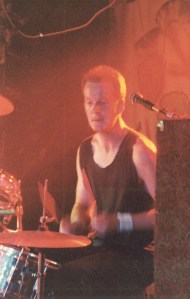 Ian Mitchell with Shoot the DJ (1983)
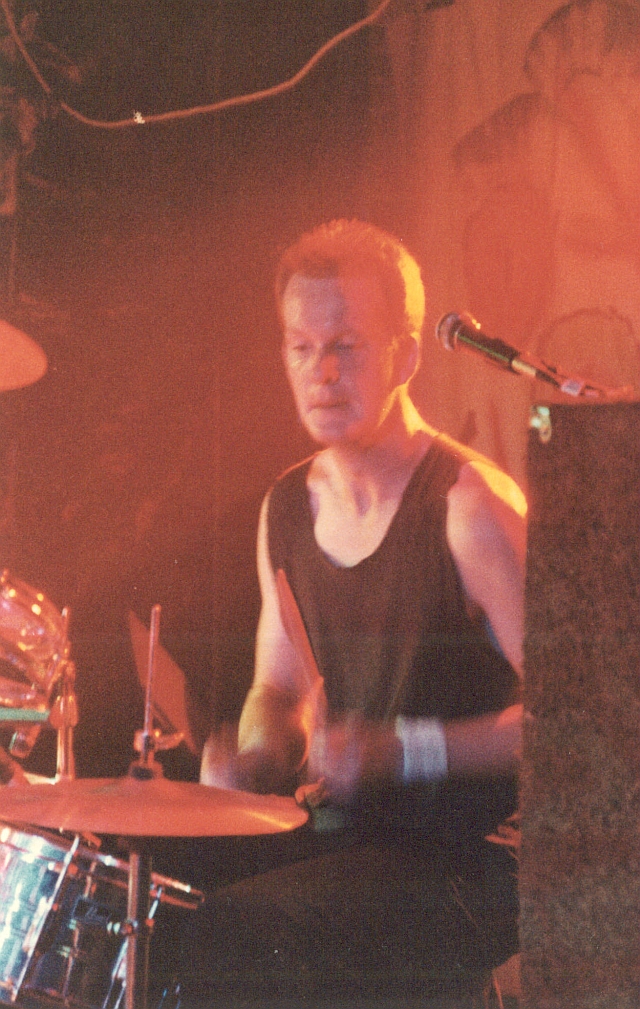
- Bands: Al Heany’s Rhythm and Blues Experience ▪ Blood Brothers (aka The Song) ▪ Captains of Industry ▪ The Deep End ▪ Delilah ▪ ftprints11 ▪ The Great Unknown Band ▪ Hey Charger ▪ IanXS ▪ The Rudiments (aka Legends of Obscurity) ▪ Shoot the DJ ▪ Some Trippin’ Diggers ▪ Speedweasel (aka Zeitgeist)
Drums/sound/songwriter

1985 †
The youngest child of teacher, historian, and raconteur Dr Bruce Mitchell (1935-2009), and teacher Jean Mitchell (nee Bull), who later served as deputy head of Armidale’s Presbyterian Ladies College (PLC), Ian Mitchell was born into a musical family. His father and grandmother were accomplished pianists, while his older siblings, Peter [below](guitar) and Judy (piano) began playing from an early age. Ian’s choice of instrument was the drums. Both influenced and inspired by his older brother he joined several bands while a student at Duval High School. The first to actually play a gig was formed with Ian Fitzgerald and Ian Woolsey, leading to the obvious name IanXS. Mitchell and Woolsey later formed another school band with three other students Tim [*], Shannon [*] and Ferris [*]. By 1982 Mitchell was also developing his skills by providing the rhythm tracks (via a drum computer) for his brother’s four track recordings. His input also soon led to assisting with sound and production techniques. During the early-1980s Mitchell and his friends sometimes frequented the Walnut Tree (formerly the Coffee House), which still offered emerging musicians an opportunity to perform in a casual and relaxed atmosphere.
In 1982, while undertaking his final year at high school, Mitchell was invited to join a band founded by former Crash Landing members Rod Clay* and Jon Anderson. He was offered the position after having impressed all concerned with a guest appearance on a couple of songs during a charity gig at Puddledock Hall (the fill-in drummer for that gig was former Crash Landing drummer Doiran James). The other musician engaged to play the gig, guitarist Ziggy Mirza [above] also agreed to continue the association. Within a few weeks the band had a name, Shoot the DJ, and played its first official gig. Mitchell’s previous experience in recording soon saw him take on responsibility, with Jon Anderson, for both the band’s live and recorded sound. Mitchell only missed one gig with band during its time together – when his mother insisted he study and get some sleep for an imminent final exam. His place was taken by Darrell Mitchell (no relation), better known as Dirty Dan. [see Shoot the DJ entry for further details]
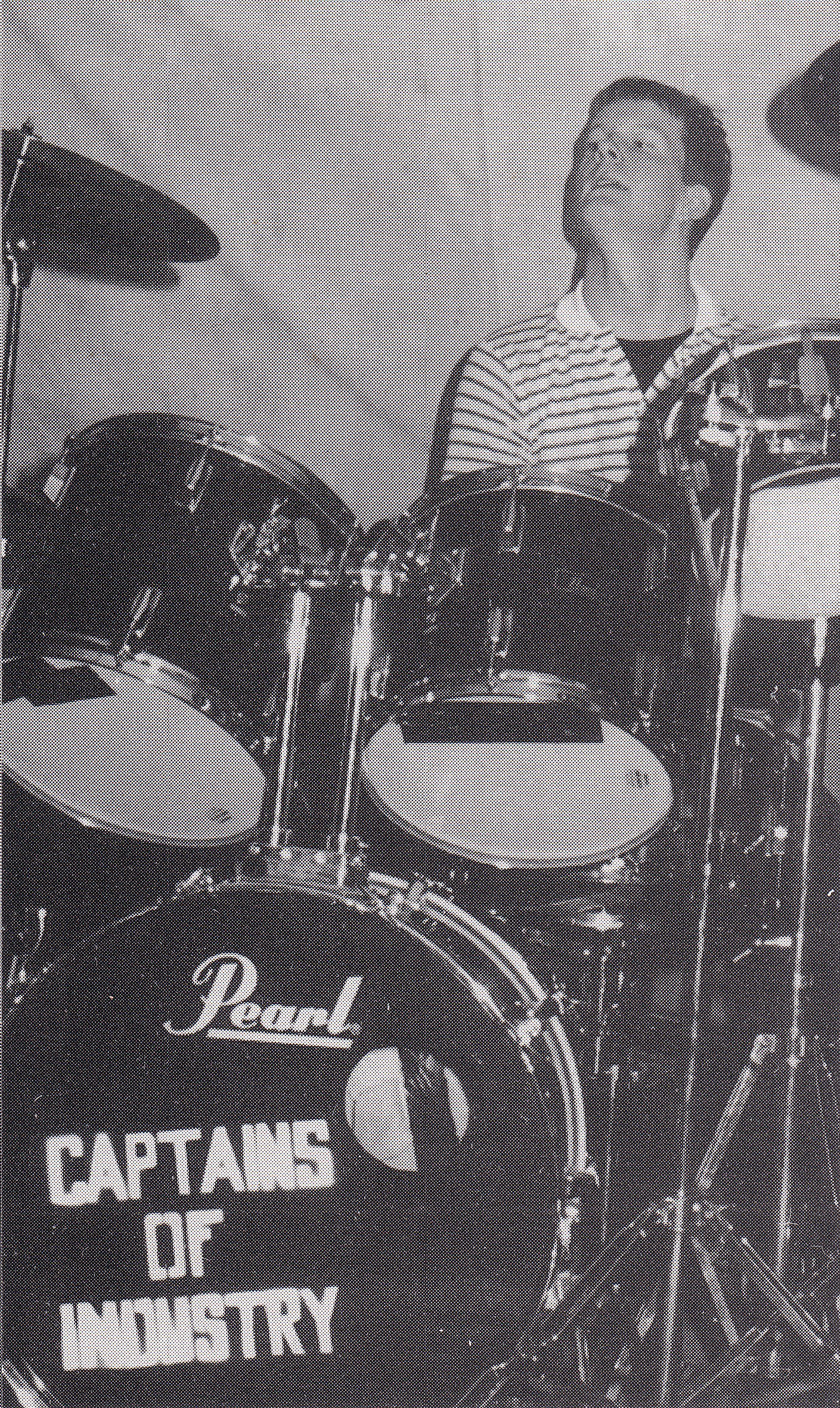
With Captains of Industry
When he moved to Sydney in early-1984 (as did Djubal and Mirza), Mitchell joined his brother in the newly formed Captains of Industry. The band established a small but enthusiastic following in Sydney and recorded many hours of music, both at the band’s own studio and at Alexander Mackay College. Seven songs were also produced by Martin Cass at JMC Studios. [see Captains of Industry entry for further details]
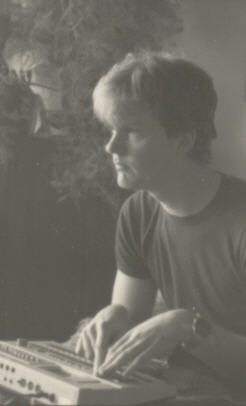
TR707 (and Ian Mitchell) †
After Captains of Industry disbanded in 1985 Mitchell once again began collaborating with Clay Djubal and Jo-ann Simmons on the Some Trippin’ Diggers‘ project (along with Ziggy Mirza, Ross Stagg,** Doiran James, and others). Later that same year he and Djubal reformed Shoot the DJ as a trio (with guitarist Nick Miles [above]) in order to undertake a tour of Northern New South Wales with Jon Anderson’s band Helga and the Blitzkrieg.
In the late-1980s and early-1990s Mitchell worked as a public servant, and for a time as a taxi driver. He also travelled overseas on several occasion. His musical efforts during this period were largely associated with his brother, being involved in the recording of the albums Wolf in a Riding Hood (1985); Broken Man (1986) a thematically linked 10 song cycle; Ghost Around the Town (1986), Music for Sundays in Winter (1987), and Arid Man (1988). In 1988 the Mitchell brothers formed a party band/ collective called The Song. A number of songs recorded in rehearsal from that period were later put together as Spontaneous By Design – under the name Blood Brothers (1992). In late-1992 Peter and Ian teamed up with their sister, Judy, Tim Hewitt, Ian Woolsey and Colin Sharp to form Legends of Obscurity. This later morphed into The Rudiments (without Judy Mitchell). The band recorded five songs at Damian Gerard’s Studios (Ultimo). Released on cassette, several hundred of these were eventually distributed. In 1995 the brothers put together a three CD compilation of Peter’s songs under titled The Great Unknown. The collection, accompanied by a book of lyrics, poems and drawings, is described by Peter Mitchell as an autobiography in song. Four years later they co-founded a three-piece recording outfit called The Great Unknown Band. Brian Miller provided bass. Among the group’s releases are Kisses from Shadows / Jewells from Tears (1999), Bald Rapunzel (2000), Fabric of Blood and Flowers (2003) and Pictures of a Life of Ink and Ash (n. yr.).
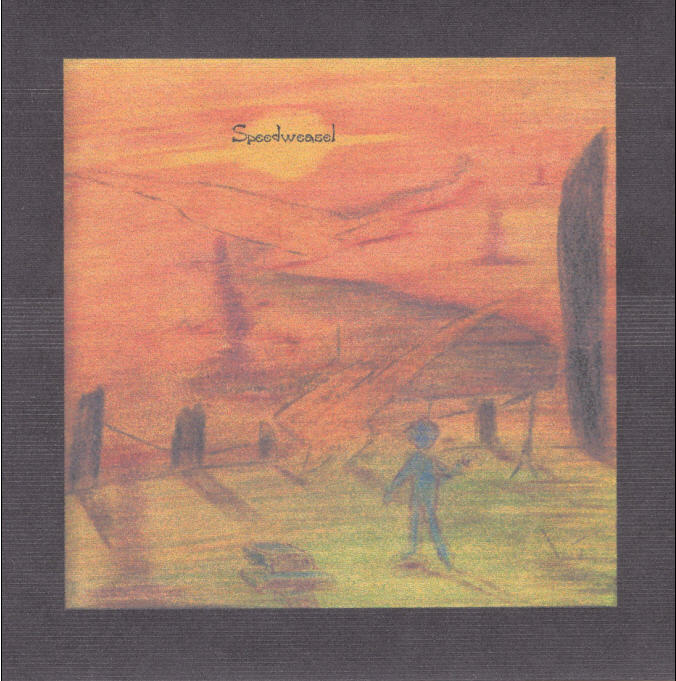
Speedweasel: ‘Blue Man’ (1999)
The late-1990s also saw Ian return to Armidale in order to undertake a degree in Information Technology at the University of New England. He and Brian Miller also co-founded Zeitgeist with James Cronin in 1999 as a means of performing live. The trio, which later changed its name to Speedweasel, went on to win the Armidale final of that year’s Battle of the Bands competition and soon afterwards won the first round of the Coffs Harbour heats. They subsequently went to Newcastle to compete in the next round of the national competition. 1999 also saw Speedweasel record and self-release its debut album, Blue Man (recorded and produced by Al Heaney at his Armidale studio).
After completing his degree Ian joined the Phoenix Foundry, Uralla (NSW), later taking over as General Manager when the original owners retired. He continues to perform in the New England region, playing drums in a number of local bands including Hey Charger (ca. 2002-05), a covers band fronted by Andy Marks, formerly of Crow; The Deep End (2004) with Al Heaney, Mark Cooper and Tony Elder; and Richard Rummery‘s outfit ftprints11. He has also performed with Al Heany’s Rhythm and Blues Experience, a local “super group” comprising the cream of Armidale musicians; and since ca. 2008 has been associated with the ‘sometimes’ band Delilah, led by former Shoot the DJ band mate Jon Anderson.
Shoot the DJ. “Radio 2LSD.” (1983) [words/music by Clay Djubal]
Some Trippin’ Diggers. “Australian Holiday (It’s All Here).” (1985, vers. 2) [words: Clay Djubal, Jo-Ann Simmons; Music: Clay Djubal, Nick Miles, Ian Mitchell]
The Rudiments. “King of the Land.” (1994) [words/music by Peter Mitchell]
Speedweezel. “Left Me Lonely.” (1999) [words/music by Speedweezel]
-
Ian Mitchell: drums/sound (all songs). “Radio 2LSD” (incl. spoken words)
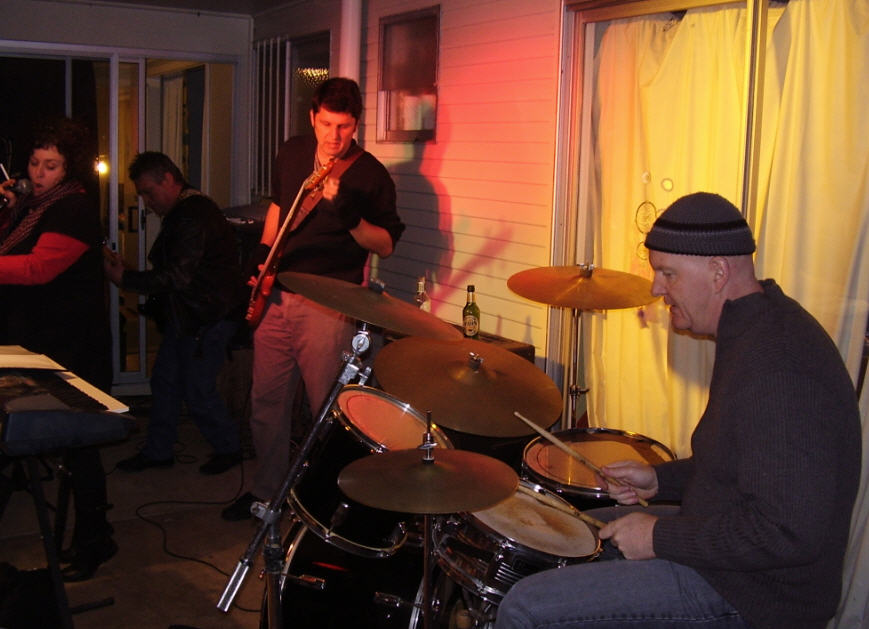
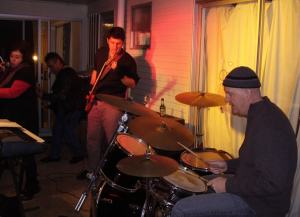 With Delilah at Jon Anderson’s 50th birthday party (Aug. 2010)
- Discography [pdf]
Source: Clay Djubal (2009) • Ian Mitchell (interview, Aug. 2010) • Peter Mitchell, The Great Unknown (1995). Images: Top photo by Heather Grigg • Black and white photos by Howard Dawson • Blue Man cover courtesy of Speedweasel • Bottom photo by Clay Djubal.
* See entry for Clay Djubal. ** see Shooting School entry. For information on John Martin Cass see JMC Academy.
Pages: 1 2
 Have Gravity Will Threaten